
Title 24 Energy Compliance in Glendale, CA
Title 24 energy compliance is a mandatory part of every ADU permit set in Glendale. California’s Building Energy Efficiency Standards – commonly called Title 24 – require a formal energy analysis and compliance report before the city will issue a building permit, and a second verification before the final inspection closes. If your permit set is missing it, or if the report was prepared for a different unit layout than what you’re actually building, the project stops until it’s corrected.
At Ellery ADU Studio Glendale, ADU Design & Permitting services build Title 24 compliance into the permit set from the first design pass, not tacked on at the end. Nadia Ellery and the studio team have produced energy compliance documentation for more than 900 ADUs designed, permitted, and built since 2015, covering everything from small garage conversions in Verdugo Woodlands to new detached studios in Montecito Park. Every project starts with a written price before any work begins – per Haven Standard, Clause 1 – so you know exactly what the compliance work costs before we touch a drawing.
Questions before you read further? Call (424) 325-4322 – a live person answers, no voicemail queue. Or read on; the dollar ranges are below.
Title 24 compliance for a Glendale ADU typically costs $650-$1,400 as a standalone report, or is included in the full permit-set scope when you use ADU Design & Permitting in Glendale through Ellery’s one-contract model. More on pricing in the section below.
When You Need Title 24 Energy Compliance
Not every homeowner arrives already knowing they need an energy compliance report. Here are the situations where it becomes the immediate next step:
- You’re pulling an ADU building permit in Glendale. The city’s Building and Safety division requires a Title 24 Part 6 compliance report with every new ADU application, whether the unit is a garage conversion, a junior ADU carved out of your existing house, or a new detached structure. No report, no permit issuance.
- Your designer delivered drawings but no energy report. Some architects and drafters hand off a plan set and leave the compliance report to the owner to sort out. That gap shows up at plan check and adds weeks to the approval timeline. We see this regularly with projects that started elsewhere and came to us for help.
- You changed the design after the report was prepared. A Title 24 report is tied to specific insulation values, window U-factors, HVAC equipment, and square footage. If the layout shifted – even a wall moved to change a window’s orientation – the report needs to be re-run. Glendale plan checkers will flag a report that doesn’t match the submitted drawings.
- You’re using a prefab or modular unit and the manufacturer’s compliance documentation doesn’t match Glendale’s climate zone. Glendale sits in Climate Zone 9, which has specific peak-cooling and insulation requirements. Manufacturer documentation prepared for a different zone – common with brands like Abodu or Cover that ship statewide – may not satisfy local plan check without a supplemental site-specific analysis.
- Your project failed a HERS verification at final inspection. A Home Energy Rating System field verification is required before the city issues a certificate of occupancy. If the installed equipment or duct work doesn’t match what the compliance report called for, final inspection fails. We help trace which specification diverged and get the correction documented.
- You’re converting an older garage in neighborhoods like Chevy Chase Canyon or Adams Hill where the existing structure has little to no wall insulation. Garage conversions in Glendale often require a prescriptive or performance compliance path that accounts for the existing envelope’s baseline, which is different from what a new-construction analysis would produce. Getting the path wrong means rework at plan check.
Our Title 24 Energy Compliance Process
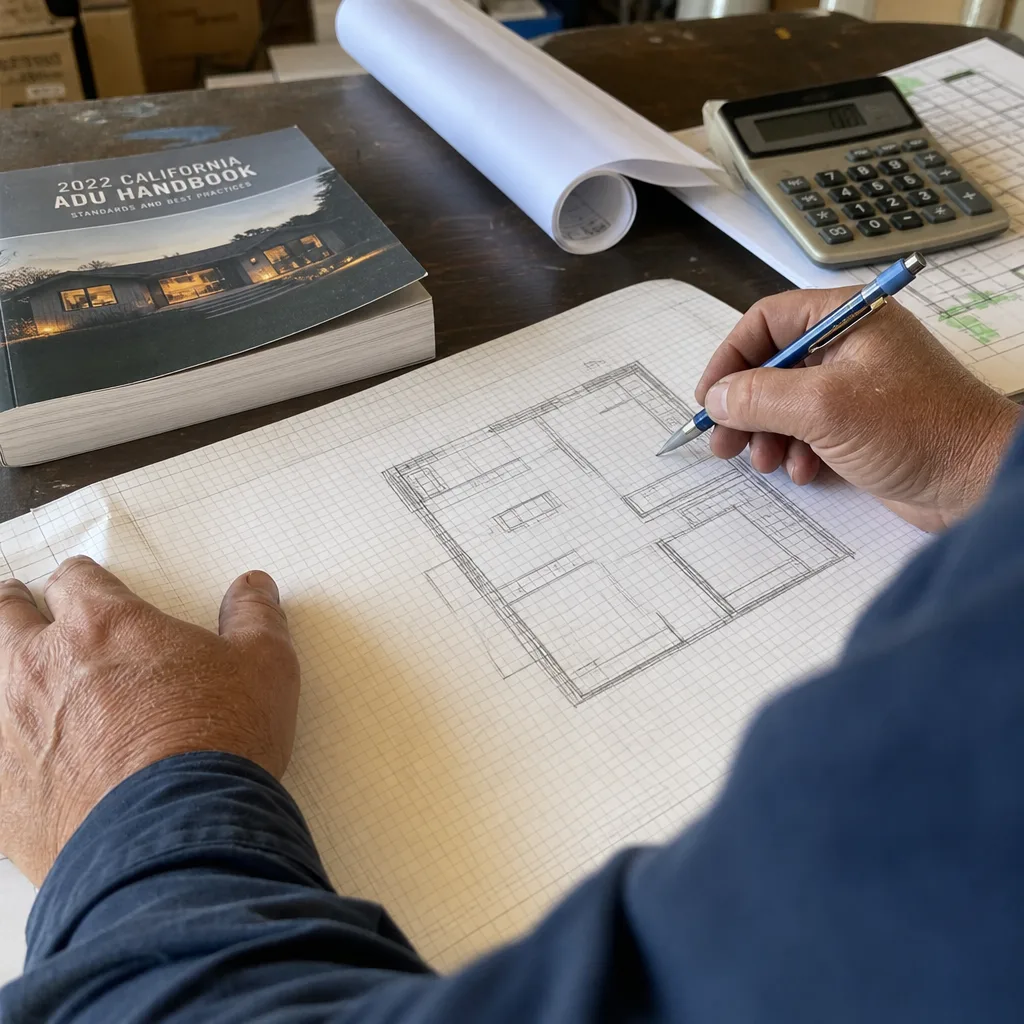
Below is exactly how we work through energy compliance on a Glendale ADU project. Nothing here is vague; every step produces a document the client receives.
- Site and design intake. We collect the ADU’s floor plan, proposed wall assembly (framing depth, insulation type, sheathing), window schedule (size, orientation, glazing specs), HVAC equipment selection, and water heating approach. For garage conversions, we also pull the existing structure’s construction year, because pre-1978 garages in Glendale’s older Rossmoyne and Brockmont neighborhoods often have uninsulated CMU or stud walls that affect the compliance path. This intake happens before we run any numbers.
- Climate zone and compliance path selection. Glendale is classified under California Climate Zone 9. That zone’s requirements for peak-cooling energy use, duct insulation, and water heater efficiency differ from adjacent zones covering Pasadena or Burbank. We confirm the correct zone assignment and then choose between the prescriptive compliance path (fixed minimum values for each component) and the performance path (a whole-building energy model that allows trade-offs between components). For most Glendale ADUs, the performance path produces a lower total cost because it lets us trade higher-efficiency HVAC for less expensive wall assemblies – or vice versa, depending on what James Hardie siding or other cladding the design already calls for.
- Energy model and CF1R report production. Using California Energy Commission-approved software (EnergyPro is the platform we use most often for Glendale submittals), we build the energy model and produce the CF1R – the Certificate of Compliance that goes into the permit set. The CF1R documents every required component: insulation R-values, window U-factor and SHGC, air barrier requirements, duct location and insulation, and water heater efficiency. The client receives a copy of the CF1R at this stage, not after permit approval.
- Coordination with the construction drawings. The CF1R values have to match the permit drawings exactly. We cross-reference every specification on the CF1R against the architectural plans and catch discrepancies before the submittal goes to Glendale Building and Safety. This step eliminates the most common plan-check correction letter: “energy report does not match submitted plans.”
- HERS field verification scheduling. Most Glendale ADU permits require one or more HERS measures – verified duct leakage, refrigerant charge verification, or envelope insulation inspection – performed by a certified HERS rater in the field. We schedule the HERS rater, coordinate their access with the build schedule, and confirm their findings are documented in the CF2R (the Installation Certificate) before we close out the file. Under the 365-Day Done Right Promise, if the finished ADU is not built to the permitted drawings and specifications, Ellery makes it right – that promise is backed in writing before the project starts.
- Final documentation package. The client receives the completed CF1R, CF2R, and CF3R (the Verification Certificate signed by the HERS rater) as part of their documented project record. These documents are what the city’s inspector stamps at final inspection. We keep a copy on file for the life of the project.
Title 24 Energy Compliance Pricing in Glendale
Title 24 compliance for a Glendale ADU typically falls in the ranges below; see How Much Does ADU Design & Permitting Cost? (2026 Price Guide) - Glendale, CA for full pricing. Every quote is written before any work begins – no exceptions, per Haven Standard Clause 1.
| Scope | Typical Cost Range |
|---|---|
| Standalone compliance report only (CF1R, no permit set) | $650 – $900 |
| Compliance report plus HERS coordination (one measure) | $900 – $1,200 |
| Compliance report plus HERS coordination (two or more measures) | $1,100 – $1,400 |
| Compliance included in full ADU permit set (design-build contract) | Included in written project price – no separate line |
| Report revision after design change post-submittal | $250 – $450 per revision |
| Compliance review and correction (project started elsewhere) | $400 – $850 depending on what needs to be re-run |
A few factors move the number within those ranges:
- Unit size. A 400 sq ft junior ADU in Glenoaks Canyon has fewer envelope components to model than an 850 sq ft detached unit with an attached covered deck. Larger models take more time to build and verify.
- Number of HERS measures required. The compliance software flags which measures need field verification. Projects with high-efficiency HVAC or ducted mini-splits in conditioned space often require refrigerant charge verification in addition to duct leakage testing, which adds a second HERS visit.
- Prescriptive vs. performance path. Prescriptive path reports are faster to produce when the design already meets minimum component values. Performance path modeling takes longer but often saves money on construction materials.
- Revisions driven by design changes. If the architectural plans change after the CF1R is filed – a window added, HVAC equipment swapped – the report has to be re-run. We quote revisions at a fixed written price when the change is identified, not after the work is done.
If you already have a written estimate from another firm for Title 24 compliance work, bring it in. We offer a free second opinion on any written estimate, and we’ll tell you plainly whether the scope covers what Glendale’s plan check will actually require.
To get your written price: call (424) 325-4322. A live person answers. We’ll ask a few questions about your project, and you’ll have a written number before any work starts.
What Title 24 Compliance Actually Affects in a Glendale ADU
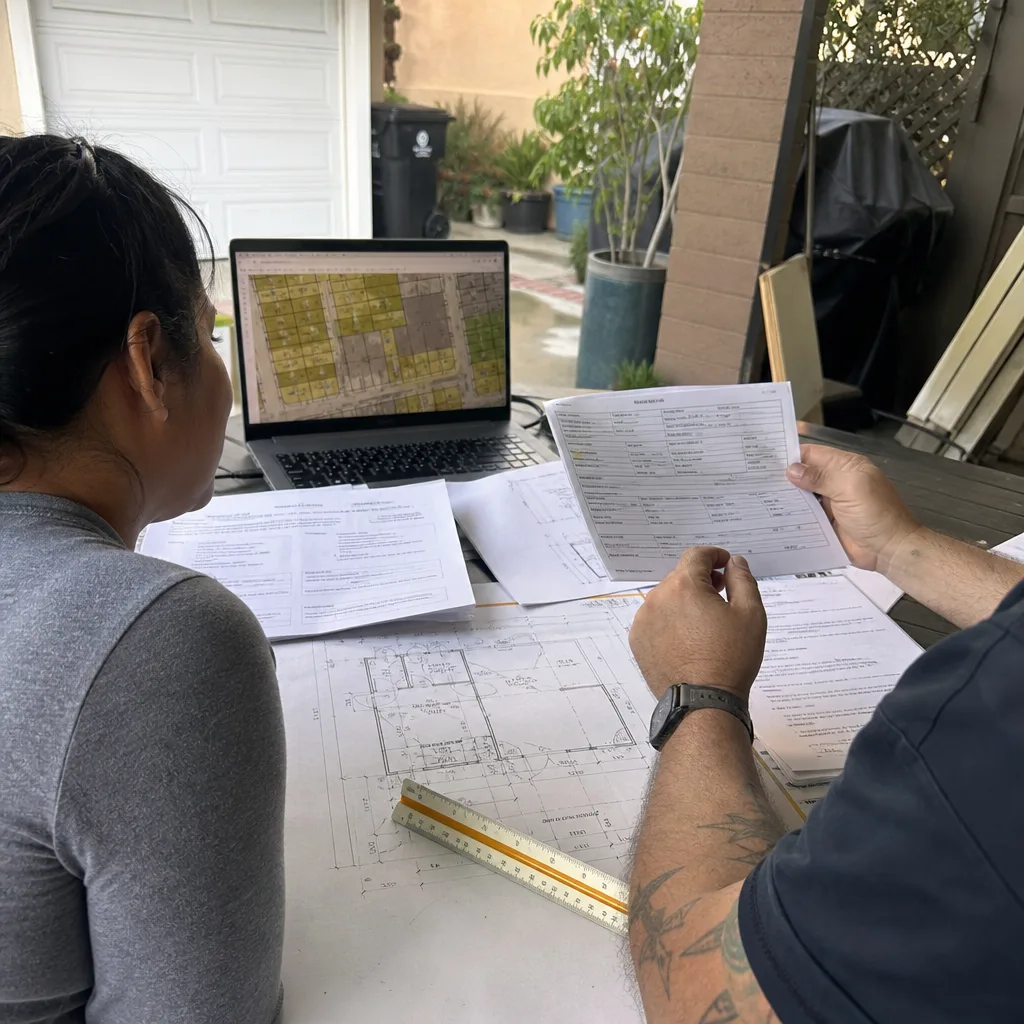
Energy compliance isn’t just a paperwork exercise. The decisions made during the compliance phase have a direct effect on construction cost and long-term operating cost – sometimes in directions homeowners don’t expect.
Glendale’s Climate Zone 9 designation means summer cooling loads drive most of the compliance challenge. The city sits at roughly 650 feet elevation in the San Fernando Valley foothills, where afternoon temperatures regularly exceed 95 degrees from June through September. A west-facing window wall on a new detached ADU in a neighborhood like Sparr Heights can increase peak cooling demand enough to require a higher-capacity HVAC unit, which costs more to buy and more to run. The compliance model catches this before construction, not after.
Insulation choices interact with cladding choices in ways that affect both compliance and budget. A design calling for James Hardie fiber cement siding, for example, can be detailed with continuous exterior insulation that raises the wall assembly’s effective R-value and may allow a less expensive HVAC specification – a real trade-off that shows up in the energy model before a dollar of construction is spent.
Water heating is the other variable that surprises homeowners. California’s current Title 24 standards strongly favor heat-pump water heaters over traditional tank units. In a small ADU, a heat-pump water heater in a confined mechanical closet can create a ventilation requirement that affects the floor plan. We flag these conflicts at the compliance-design coordination step, not at framing.
Title 24 Compliance and the Full ADU Permit Set
Title 24 compliance doesn’t exist in isolation from the rest of the permit set. In Ellery’s ADU Design & Permitting in Glendale process, the energy model runs in parallel with the architectural drawings so that window specifications, wall assemblies, and HVAC selections are resolved before the permit set is finalized – not in a separate conversation with a separate consultant after the drawings are done.
That integrated approach is part of what the one-contract model is for. When the designer and the builder are the same entity working from the same written scope, the CF1R’s equipment specifications show up in the construction contract, not as a separate document that the builder may or may not follow. Under Haven Standard Clause 5 (No Surprises), the scope is locked at signing. If the as-built condition diverges from the permitted drawings and the CF1R, the 365-Day Done Right Promise applies: we make it right, in writing, at no additional cost to you.
For homeowners evaluating prefab units, this integration matters even more. A modular unit from a manufacturer like Cover or Abodu arrives with factory-built envelope assemblies that have specific R-values and window packages. Those specs need to be verified against Glendale’s Climate Zone 9 requirements before the site permit is filed. We do that verification as part of the permit-set process, not as an afterthought.
FAQs – Title 24 Energy Compliance in Glendale
Does every ADU in Glendale require a Title 24 compliance report?
Yes – every new ADU, garage conversion, and junior ADU in Glendale requires a Title 24 Part 6 compliance report as part of the building permit application. There is no square-footage threshold below which the requirement goes away. The only partial exception is an existing unpermitted structure that is being legalized without any physical improvements to the envelope or systems, but those situations are evaluated case by case with the city. Call (424) 325-4322 if you’re unsure which category your project falls into – we’ll give you a straight answer.
How long does it take to get a Title 24 compliance report in Glendale?
A standard CF1R compliance report takes 5-10 business days from the point when we have complete design information: finalized floor plan, window schedule, wall assembly specs, and HVAC equipment selection. If the design is still in flux when we start, that timeline extends because the report has to reflect the final design. Projects where we’re producing the full ADU Design & Blueprints permit set typically have the compliance report ready within the same production window as the architectural drawings, since both run in parallel. Revisions after a plan-check correction letter add 3-5 business days depending on what changed.
What is a HERS rater and do I need one for my Glendale ADU?
A HERS (Home Energy Rating System) rater is a California-certified field inspector who verifies that specific energy measures were actually installed as specified in the compliance report – things like duct leakage levels, refrigerant charge, and envelope insulation. Most Glendale ADUs require at least one HERS measure, and the city’s inspector will ask for the signed CF2R and CF3R before issuing a certificate of occupancy. We coordinate the HERS rater and schedule their visits as part of our compliance scope, so you’re not tracking down a separate contractor at the end of construction.
What happens if my Title 24 report doesn’t match the plans I submitted to Glendale Building and Safety?
Glendale’s plan checkers compare the CF1R to the architectural drawings during plan check review. A mismatch – different window sizes, different wall assembly, different HVAC specs – results in a correction letter that stops the permit clock. You’ll need to either revise the drawings to match the report or re-run the report to match the revised drawings, then resubmit both. That typically adds 3-6 weeks to the permit timeline. Our coordination step between the compliance report and the construction drawings exists specifically to prevent this from happening. If you’re coming to us after receiving a correction letter on a project we didn’t originate, we can produce the corrected report and coordinate the resubmittal – quoted at a flat written price before we start work.
Key Takeaways
- Title 24 compliance is required for every ADU permit in Glendale, regardless of unit size or type.
- Glendale sits in Climate Zone 9, which has specific summer-cooling and water-heating requirements that differ from neighboring cities.
- A standalone compliance report typically costs $650-$1,400 in Glendale; when included in a full permit-set scope, it’s part of one written project price.
- The CF1R (compliance report), CF2R (installation certificate), and CF3R (HERS verification) are all required before the city issues a certificate of occupancy.
- Every compliance scope at Ellery ADU Studio comes with a written price before work starts and is covered by the 365-Day Done Right Promise.
- A free second opinion is available on any written compliance estimate you already have in hand.
Ready to Get Your Glendale ADU’s Title 24 Compliance Done Right?
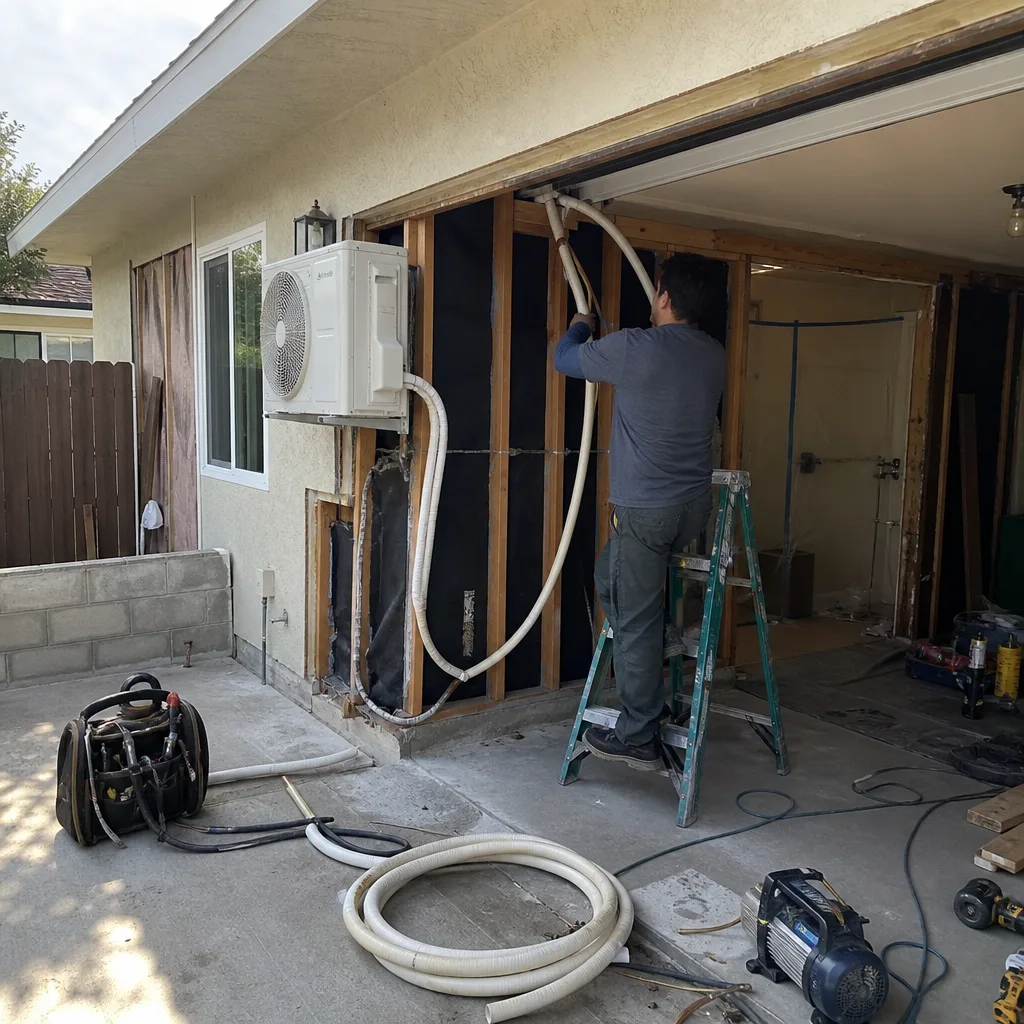
Call Ellery ADU Studio Glendale at (424) 325-4322. A live person answers – not a voicemail queue, not a callback promise. Tell us where your project stands: early design, mid-permit, or already at plan check with a correction letter. We’ll tell you exactly what the compliance work involves, what it costs, and what documents you’ll have when it’s done. The written price comes first, before any work starts – that’s Haven Standard Clause 1, and it applies to every project we touch.
If you want to understand how Title 24 compliance fits into the broader permit process, the home page gives you the full picture of how Ellery’s one-contract model works from site assessment through final inspection sign-off.
Written by Nadia Ellery, Owner at Ellery ADU Studio Glendale, ADU Design & Permitting Near Me in Glendale, CA.