
Boxabl New Detached ADU: The Glendale Owner’s Guide
Boxabl-compatible new detached ADU installation in Glendale typically runs $285,000-$420,000 all-in, covering the Boxabl Casita module, foundation, utility tie-ins, and full permit-to-occupancy coordination. We stock Boxabl-specific connection hardware and MEP interface kits on our Glendale trucks, and most detached ADU projects we coordinate move from contract to foundation pour in 6-10 weeks, depending on LADBS-Glendale plan check timing. Most Glendale owners first realize something is off when their Boxabl module arrives and the site isn’t ready, or when the utility stub-ins don’t match the city’s updated water main specifications.
Which Boxabl Models This Applies To
We coordinate Boxabl Casita modules, the 375-square-foot rectangular unit that ships folded and expands on-site. The current production series uses a 19.5-foot transport width and requires a 20-foot crane reach minimum for Glendale lots with slope or tight access. Earlier pilot-series units had different exterior connection points for water and electrical; if your Boxabl was delivered before 2022, the MEP rough-in locations may differ by 8-12 inches from current specs.
Identifying your series: check the data plate inside the utility chase, usually behind the exterior access panel near the water heater. The plate lists the manufacturing quarter and a serial prefix. Current production starts with “CB3-” followed by the year and quarter. Pilot-series units start with “CB2-” and require adapter plates for the electrical subpanel that we fabricate in-house.
OEM versus aftermarket for Boxabl is straightforward in one respect, tricky in another. Boxabl supplies their own wall-connection bolts, flashing kits, and weather seals; we use these OEM parts for warranty continuity. For the foundation anchor system and utility transition couplings, we specify third-party components rated for California seismic zones that often exceed Boxabl’s base spec. The number on the page is the number we work from.
Signs Your Boxabl New Detached ADU Is Failing
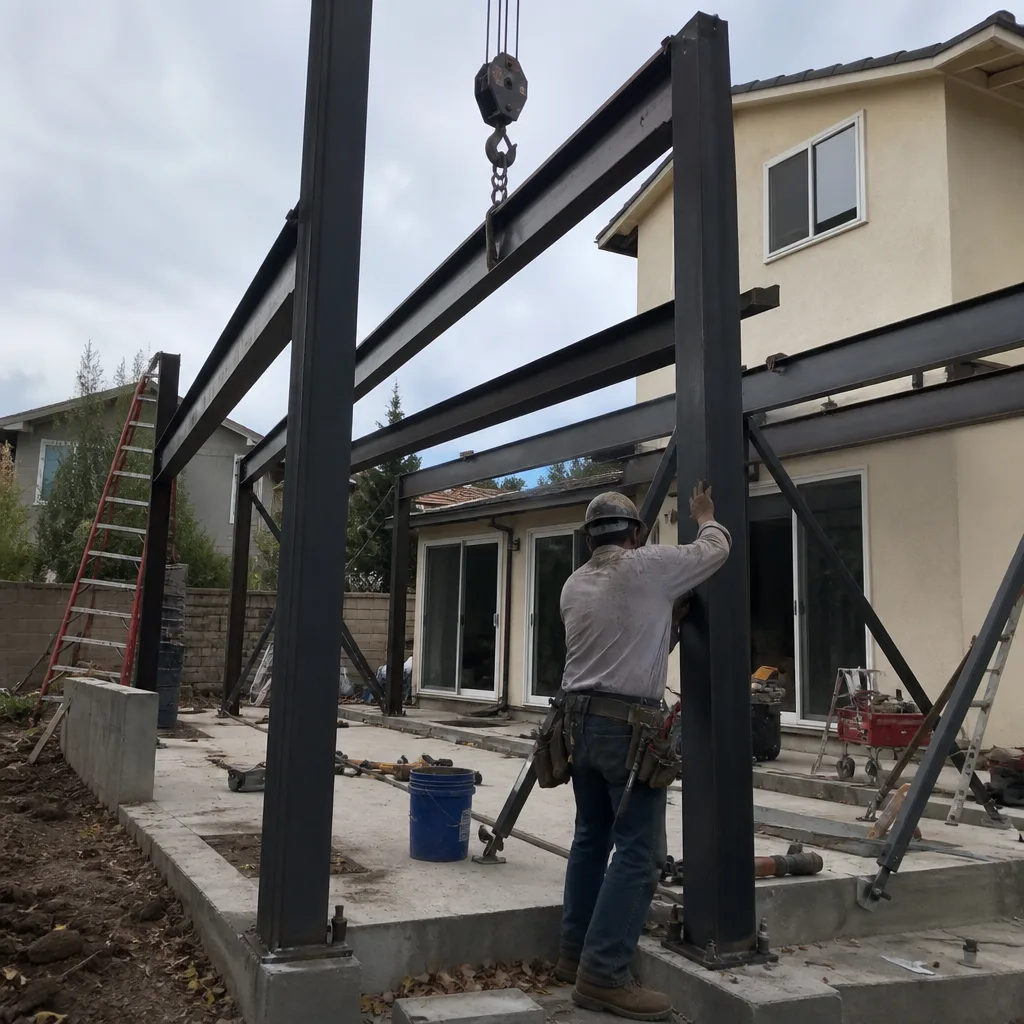
- Utility connections leak or fail pressure test. The flexible water supply couplings that ship with Boxabl modules are rated for 150 PSI, but Glendale’s water pressure in the Verdugo Woodlands foothills area regularly tests at 80-110 PSI static. Combined with thermal expansion in our 90°F+ summer months, the OEM couplings can fatigue at the crimp joint within 18-24 months.
- Wall panels show seam separation after expansion. The Boxabl unfolds hydraulically on-site; if the foundation isn’t leveled to within 1/8 inch across the full perimeter, the folding wall sections carry uneven load. We see this most often on owner-prepared sites where the gravel pad was compacted without a geotechnical report.
- HVAC short-cycles or fails to maintain temperature. The integrated mini-split is sized for the 375-square-foot envelope, but Glendale’s solar heat gain through south-facing Casita windows can exceed the base load calculation by 30% in July and August. This isn’t a part failure; it’s a specification mismatch we catch during our pre-order site assessment.
- Floor deflection or bounce in the center span. The Boxabl floor system is a steel-frame composite with a 16-foot clear span. On sloped Glendale lots where the foundation step-down exceeds 24 inches, the module can twist slightly during set, creating a perceptible deflection that worsens over time.
- Exterior flashing leaks at the roof-wall junction. The factory-applied peel-and-stick membrane performs adequately in dry climates. Glendale’s occasional heavy winter rains, combined with the thermal cycling of our inland valley climate, can degrade the adhesive bond at the upper corners where the folded roof sections meet the wall panels.
Replacement Cost & What’s Included
Boxabl ADU coordination and correction work in Glendale falls into three cost tiers. Connection hardware and MEP interface replacement runs $4,200-$7,800, including OEM bolts, upgraded seismic anchors, and pressure-tested utility couplings. Foundation remediation for an already-delivered module runs $12,000-$28,000, depending on whether we need to regrade, add piers, or pour a new stem wall. Full re-coordination of a stalled project, where the module is in storage and the site needs restart, runs $18,500-$35,000 including revised permit drawings and re-inspection scheduling.
Every Boxabl project we take on includes the documented photo record on every visit, permit set revision if LADBS-Glendale requests changes, and the 365-Day Done Right Promise in writing. Under Haven Standard Clause 1, the price is fixed before any work starts. No change orders for conditions we could have seen.
DIY or Call Us?
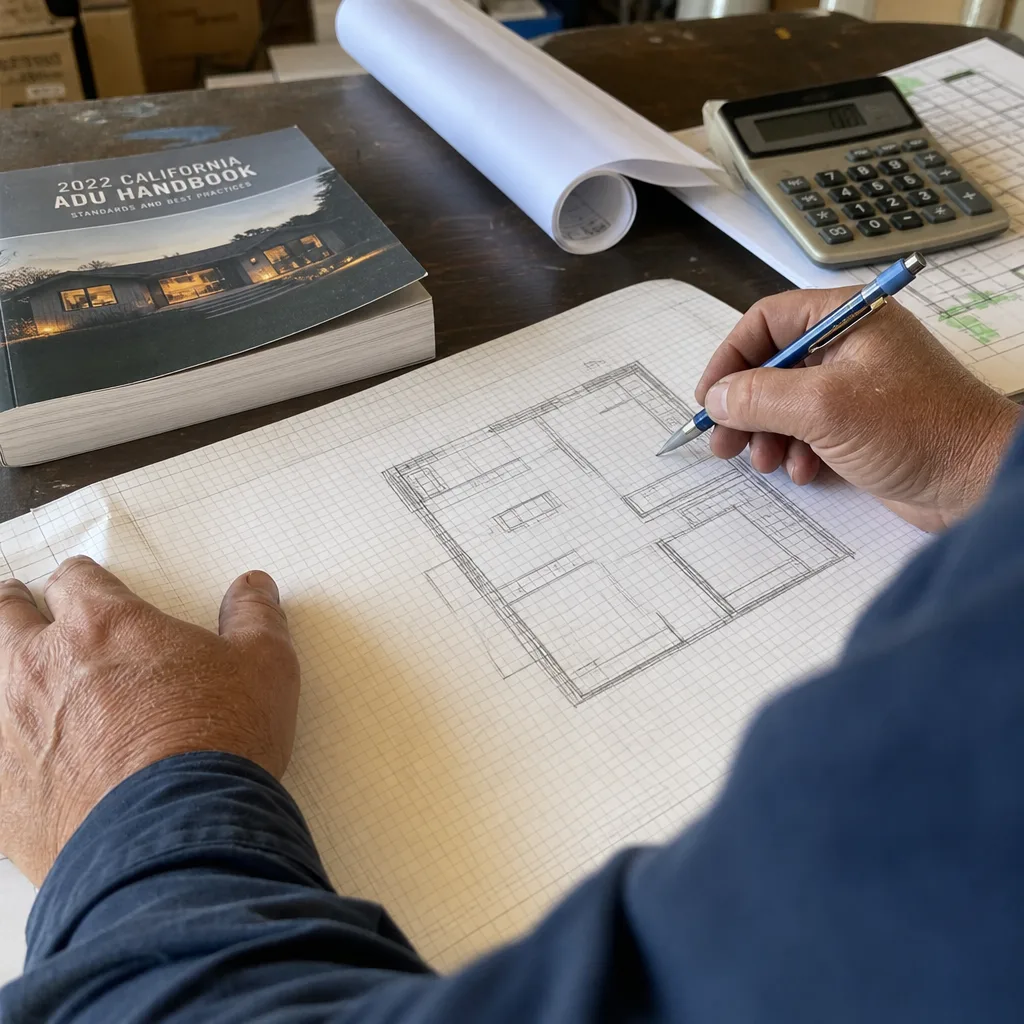
There’s a clear line here. An owner can safely verify the data plate series, photograph any visible leaks, and check that the foundation pad is within level using a 4-foot spirit level. What goes wrong past that point is expensive. The wall-connection bolts are torqued to 110 ft-lb in a specific sequence; done out of order, the gasket compresses unevenly and the warranty voids. The electrical subpanel ties into Glendale’s updated 2023 NEC adoption with AFCI requirements that differ from Boxabl’s base documentation. And the crane set is non-negotiable; we’ve seen homeowners rent inadequate equipment and crease a roof panel, turning a $6,000 fix into a $40,000 module replacement.
We’re not affiliated with Boxabl; we’re an independent design-build studio that specifies and coordinates their system within our single-contract model. If your Boxabl project is stalled or showing symptoms, call (424) 325-4322. We’ll schedule a site visit, document what we find, and give you a written price before any work starts.
FAQs
The steel frame and composite panels are rated for 50+ years structurally. In practice, the weather seals and MEP flex connections need inspection at year 3 and replacement by year 7-10 in Glendale’s heat-cycling environment. We build this maintenance schedule into every Boxabl project we coordinate. Call (424) 325-4322 to schedule a condition check - estimates are free.
Utility couplings and weather seals must be replaced once they show failure; patching extends risk but not service life. Foundation-level issues can sometimes be shim-corrected if caught early, but wall-seam separation from uneven load almost always requires module lift and re-set. Call (424) 325-4322 and we’ll tell you which category you’re in - estimates are free.
Typical timeline is 14-22 weeks in Glendale: 4-6 weeks for permit set and LADBS-Glendale plan check, 2-4 weeks for site prep and foundation, 1 day for module delivery and set, then 4-6 weeks for utility tie-in, finish, and final inspection. Pilot-series units add 2-3 weeks for adapter fabrication. Call (424) 325-4322 for a timeline specific to your lot and module series.
We stock the connection bolt sets, seismic anchor hardware, upgraded water couplings, and roof-corner flashing kits that Boxabl doesn’t include in their base shipment. OEM-specific wall gaskets and the hydraulic expansion system components come factory-only with a 3-4 week lead time; we pre-order these once the permit is approved so they’re on-site for set day. Call (424) 325-4322 to confirm current stock for your module series.
Written by Nadia Ellery, Owner & Principal Designer, Ellery ADU Studio Glendale at Ellery ADU Studio Glendale, serving Glendale and nearby areas.