
Abodu Junior ADU Conversion: The Glendale Owner’s Guide
We stock and install Abodu-compatible junior ADU conversion components in Glendale, with most replacement parts available same-day and installed pricing typically running $2,800-$4,200 depending on the subsystem involved. The number on the page is the number we work from. Most owners discover a failing conversion component when their junior ADU’s HVAC integration, electrical subpanel, or wet-wall connection starts throwing permit inspection flags during routine follow-up, or when the original Abodu install documentation shows a part number that no longer matches current city requirements. Glendale’s 2023 ADU ordinance updates and specific hillside foundation triggers in the Verdugo Woodlands and Chevy Chase Canyon areas mean some early Abodu junior conversions need component-level updates to stay compliant.
Which Abodu Models This Applies To
This applies to Abodu One and Abodu Two junior ADU conversions, specifically the interior conversion kits designated for attached and garage-conversion deployments, not the standalone detached units. The key identifier is the serial plate on the electrical subpanel: Abodu junior conversions shipped between 2020 and 2023 use a Siemens 125-amp load center with a specific bus-bar configuration that Glendale Building & Safety now flags during resale inspections if it lacks the updated AFCI/GFCI breakers required under the 2022 NEC adoption.
The wet-wall manifold is another differentiation point. Early Abodu junior units used a Viega ManaBloc with 3/8-inch distribution lines; current Glendale code for conversions over 400 square feet requires 1/2-inch minimum to maintain adequate pressure across multiple fixtures. We stock both the OEM Viega replacement and the Uponor equivalent, which we specify when the original manifold location doesn’t allow proper access for future servicing. Cover and Dvele use different manifold standards, so cross-brand substitution isn’t viable without a full plumbing redesign.
To identify your specific part needs, check three things: the subpanel serial date stamp, the manifold label color (blue ring = 3/8-inch, green ring = 1/2-inch), and your original permit set’s mechanical schedule page. We keep Abodu-specific documentation on file and can cross-reference your address permit history directly with Glendale’s online system.
Signs Your Abodu Junior ADU Conversion Is Failing
- Repeated AFCI breaker trips on the kitchen or bathroom circuits. This usually indicates the original Siemens breakers are the pre-2022 type without combined AFCI/GFCI protection. Glendale inspectors now write this as a correction on any permit reactivation, and simply resetting the breaker won’t satisfy code. The fix is a breaker swap, but the bus bar must be verified compatible first, which determines whether you’re looking at breakers or a full subpanel replacement.
- Low hot water pressure at the kitchen sink but normal pressure at the shower. The 3/8-inch Viega distribution lines in early Abodu junior conversions were sized for minimal fixture count. When Glendale owners add a dishwasher or upgrade to a deeper sink with a pull-down faucet, the pressure drop across the small lines becomes obvious. This isn’t a water heater failure; it’s an undersized distribution manifold for the actual load.
- Condensation forming on the interior side of the Abodu’s pre-finished wall panels. Abodu junior conversions rely on a specific vapor barrier sequence between the existing garage or interior wall and the new finished surface. In Glendale’s climate, particularly in north-facing conversions in the foothills where morning fog lingers, a compromised vapor barrier lets moisture hit the cool side of the panel. The visible symptom is surface mold or bubbling paint; the underlying issue is the barrier detail at the panel edge, which requires partial disassembly to correct.
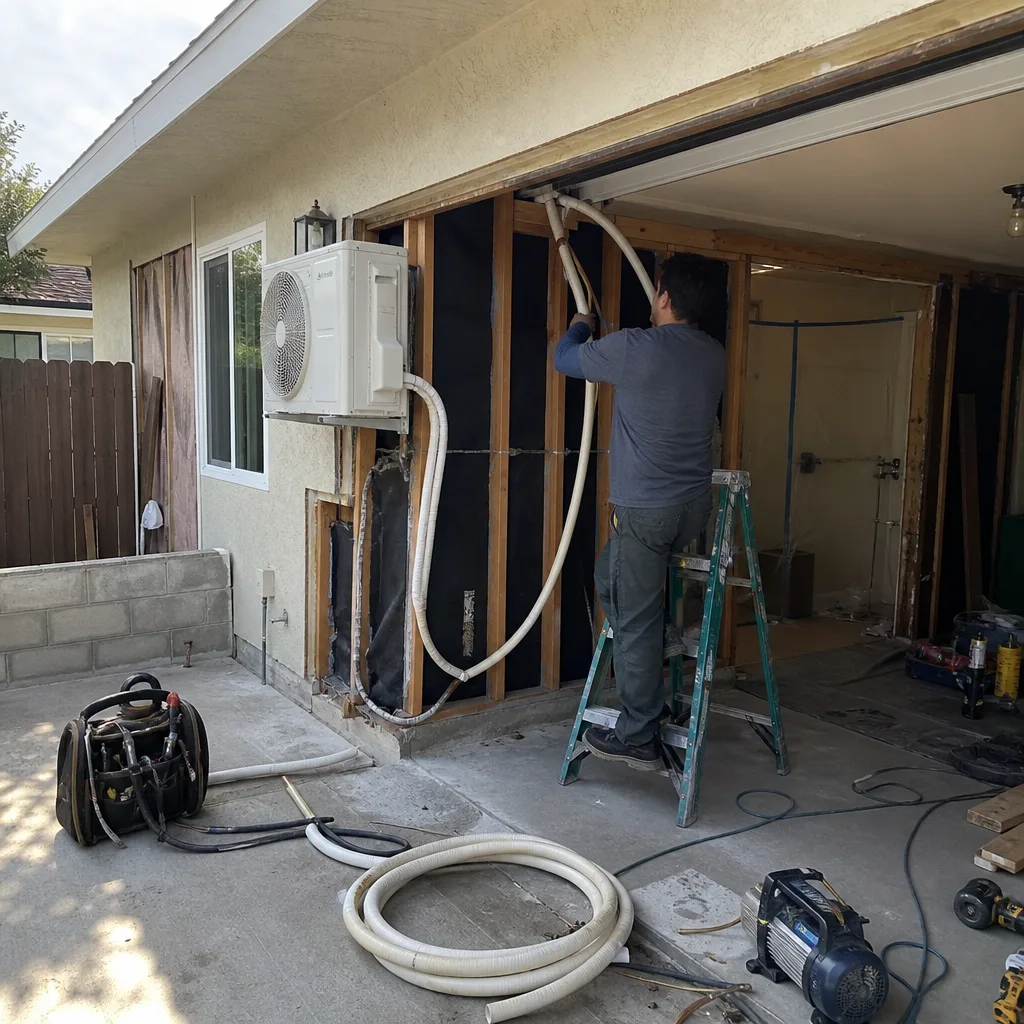
- HVAC mini-split failing to maintain set temperature despite correct refrigerant charge. Abodu specifies a Mitsubishi or LG unit sized for the original envelope assumptions. In Glendale, many junior ADU conversions are in garages with uninsulated slab edges or single-pane existing windows that weren’t part of Abodu’s load calculation. The part that fails isn’t the compressor; it’s the capacity margin. We see this in the Rossmoyne and Glenwood areas where 1950s garages have minimal thermal boundary.
- Permit reactivation denied due to “unapproved materials” notation. Glendale’s plan checkers now cross-reference Abodu junior conversion component lists against the approved materials matrix in the 2022 California Residential Code. If your original install used a plumbing or electrical component that has since been delisted or superseded, the permit can’t proceed without a substitution letter from a licensed designer. We draft these as part of our standard scope.
Replacement Cost & What’s Included
| Component | Typical Range (Installed) | What’s Included |
|---|---|---|
| AFCI/GFCI breaker upgrade (compatible bus bar) | $380-$620 | Breakers, labor, permit correction letter, inspection coordination |
| Subpanel replacement (Siemens to updated spec) | $1,800-$2,600 | Panel, breakers, grounding update, permit amendment, inspection |
| Viega ManaBloc swap to 1/2-inch | $2,200-$3,400 | Manifold, distribution lines, pressure test, permit update |
| Vapor barrier remediation (panel edge detail) | $1,400-$2,800 | Disassembly, barrier replacement, re-finishing, moisture verification |
| HVAC load recalculation + unit resize | $2,800-$4,200 | Manual J, equipment spec, electrical check, permit revision |
The range driver is always access. An electrical subpanel in an open garage wall is straightforward; the same panel behind finished Abodu panels in a occupied junior ADU in the Adams Hill area requires protective work and dust containment. Every replacement we quote includes the permit amendment or correction letter, the inspection itself, and our 365-Day Done Right Promise under Haven Standard Clause 7. Under Clause 1, the written price is fixed before any work begins. No change orders, no discovery fees.
DIY or Call Us?
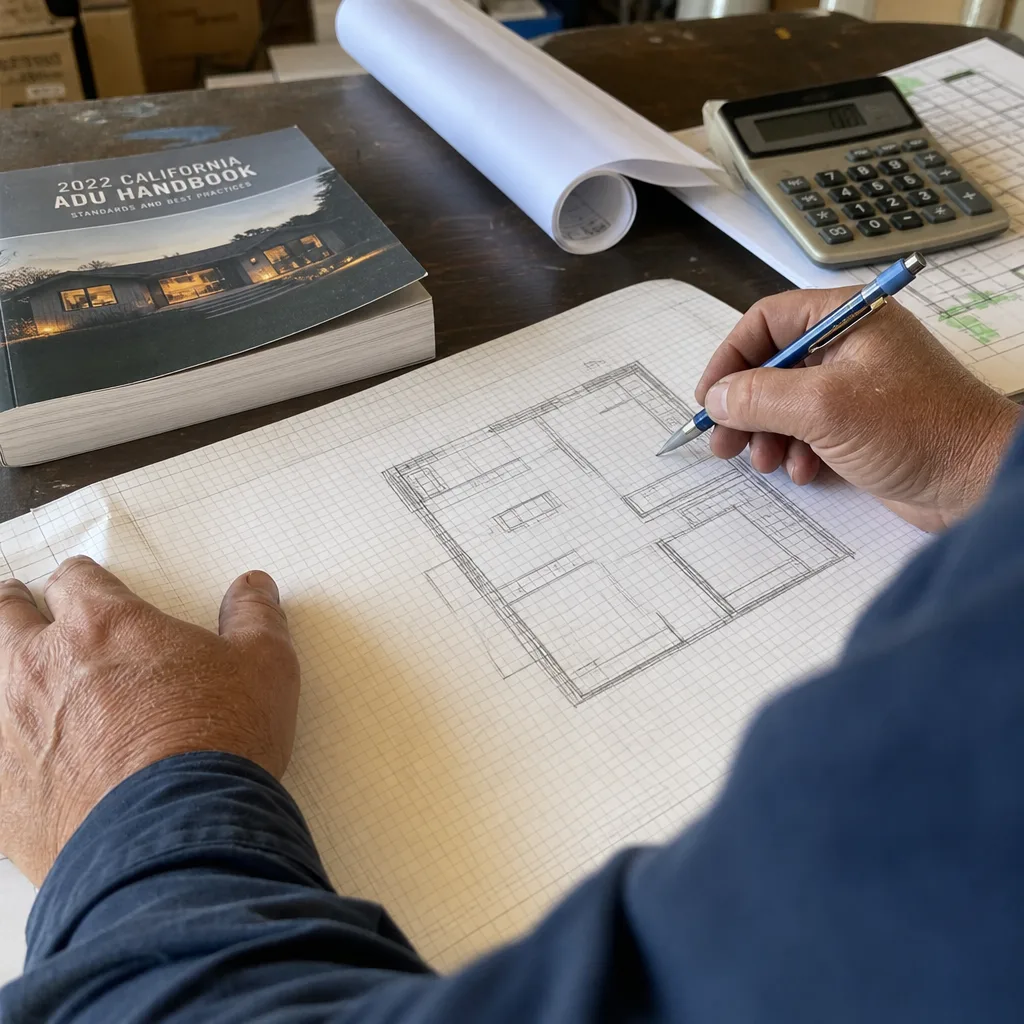
There’s a clear line here. An owner can safely check the subpanel serial date, photograph the manifold label, and verify the original permit set against Glendale’s online portal. These three checks tell you whether you’re in the affected component range, and they cost nothing.
What goes wrong with DIY on these systems: the electrical subpanel in an Abodu junior conversion is fed from the main house panel, often with a 70-amp breaker that must be locked out before work begins. California requires a licensed electrician for panel modifications, and Glendale inspectors will ask for the C-10 license number on the permit. The wet-wall manifold involves pressurized lines that must be depressurized and repressurized to code; a slow leak behind finished panels causes damage that exceeds the original repair cost by multiples. We don’t recommend owner attempts on either subsystem.
If your symptoms match what we’ve described, call (424) 325-4322. We’ll verify your component compatibility against Abodu’s spec sheets and your permit history, then give you a written price before any work starts.
FAQs
The electrical subpanel and breakers have a 15-20 year functional lifespan, but code compliance is the real clock. Glendale adopted the 2022 NEC in 2023, which made certain breaker types non-compliant for new work and permit corrections. The wet-wall manifold typically lasts 20-25 years unless water chemistry issues accelerate corrosion; Glendale’s municipal water is moderately hard, which we’ve found adds roughly 10% wear compared to softer sources. Call (424) 325-4322 to check whether your specific install date triggers current code requirements.
Breakers and manifold valves are replaceable as individual components, but the underlying compatibility issue remains. A pre-2022 AFCI breaker can be swapped for a newer Siemens type only if the bus bar accepts it; if not, the panel itself must be replaced. Similarly, a single leaking manifold port can be capped, but the 3/8-inch versus 1/2-inch sizing issue affects the whole system’s adequacy. We evaluate repair-versus-replace on every call and document the code implication of each path in writing before you decide.
Breaker upgrades are same-day, two to four hours. Subpanel replacements take one day, with Glendale inspection typically schedulable within 48 hours. Wet-wall manifold swaps require water shutoff coordination and take one to two days depending on finish repair scope. HVAC recalculation and resize spans two to three weeks including Manual J completion, equipment procurement, and permit amendment. We coordinate all inspection scheduling and include it in the fixed written price.
We stock the Siemens breaker sets, Viega and Uponor manifolds, and vapor barrier materials that Abodu junior conversions require. The specific Mitsubishi or LG HVAC unit depends on the recalculated load, which we confirm before ordering. For Glendale addresses, our standard lead time on stocked components is same-day to 48 hours. Special-order items, typically HVAC equipment, run 5-10 business days. We don’t begin work until all materials are on-site and verified against the permit set.
Ellery ADU Studio Glendale is an independent service provider; we are not affiliated with Abodu, though we specify and coordinate their systems within our single-contract design-build model. We also work with Cover, Dvele, and other prefab brands when the project calls for it.
Ready to resolve your Abodu junior ADU conversion issue? Call (424) 325-4322 to schedule your free estimate. We’ll verify your component compatibility, check your Glendale permit status, and deliver a written price before any work begins - per Haven Standard Clause 1, always.
Written by Nadia Ellery, Owner & Principal Designer, Ellery ADU Studio Glendale at Ellery ADU Studio Glendale, serving Glendale and nearby areas.